The refugee crisis of Latin America
The United States’ relationship with Latin American countries is not considered that friendly on any account. Whether it is land acquisitions in the Mexican-America War, or the establishment of banana republics, conflicts from long ago subject Latin Americans to violence and poverty. While this half of the global south faces its issues, other regions are affected by war and suffering, forcing citizens out of their own country in search of safety and asylum. <a href="http://<!– wp:paragraph {"align":"center","placeholder":"Write title…","fontSize":"large"} –> <p class="has-text-align-center has-large-font-size">The refugee crisis of Latin America</p> <!– /wp:paragraph –> <!– wp:paragraph –> <p>The United States’ relationship with Latin American countries is not considered that friendly on any account. Whether it is land acquisitions in the Mexican-America War, or the establishment of banana republics, conflicts from long ago subject Latin Americans to violence and poverty. While this half of the global south faces its issues, other regions are affected by war and suffering, forcing citizens out of their own country in search of safety and asylum.</p> (featured image source)
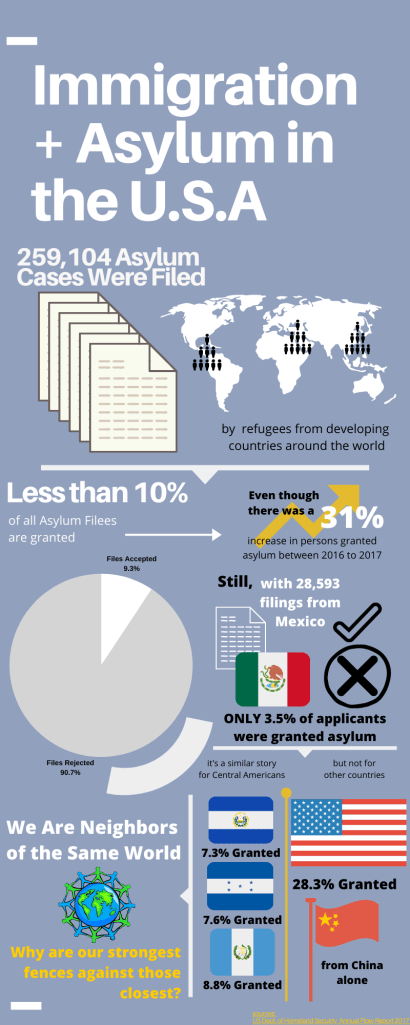
The U.S. has long dubbed itself as the leader of the free world- but as a country, does it really put its money where its mouth is? The United States rejects over 90% of the quarter million asylum cases filed both defensively and affirmatively. While this acceptance rate is below 10%, it is a 31% increase in the amount of refugees granted asylum between 2016 and 2017. This leads me to two conclusions: First, the U.S. has not been doing as much as it could have for aiding refugees in modern conflicts. Secondly, the Land of the Free can accommodate much more than what the government leads on. This sudden bump makes it very apparent that with all of the conflicts happening around the world, the U.S. has become very selective on who is allowed safety in our borders.
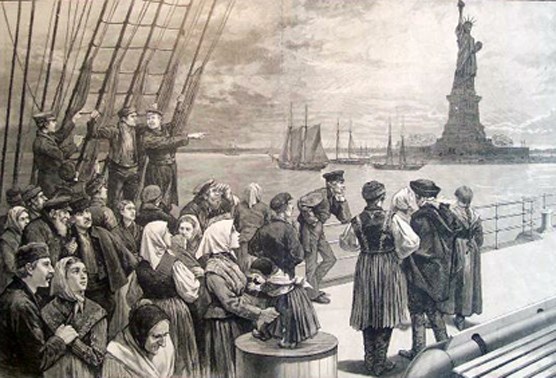
“Give me your tired, your poor, Your huddled masses yearning to breathe free, The wretched refuse of your teeming shore. Send these, the homeless, tempest-tost to me, I lift my lamp beside the golden door!
– Emma Lazarus
The most drastic of this selection disparity can be found between one of our closest neighbors: Mexico. With a tumultuous history of war, land acquisition, and labor exploitation of the U.S. onto our neighbor, the same spirit of freedom is held by the U.S. in it’s acceptance of only a mere 3.5% of asylum cases that were filed. The likelihood of being accepted as a refugee from Mexico into the U.S. is even worse than a college student trying to get into Stanford. Although instead of higher education, real lives are on the line. The same story can be told for Latin American countries with less than a 9% acceptance rate such as Honduras, El Salvador, and Guatemala, each represented with their flags. They remain on the outside of the American flag, meanwhile China, whose acceptance rate is at 28.3%, is located safely inside our local symbol of freedom. With numbers that high, the disparity of asylum cases granted is clearly skewed against our own neighbors. Source.
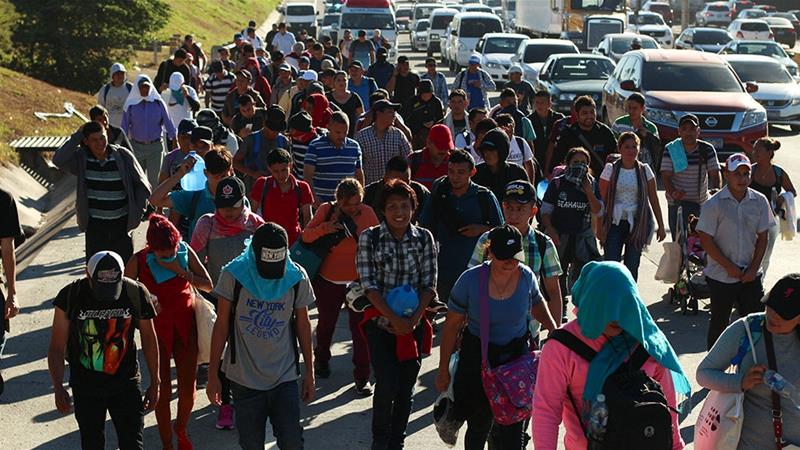
While there was an increase in the amount of cases granted, most of those spots were allocated to other countries, such as China. This infographic is not meant to criticize the U.S. for the cases granted to Chinese applicants, rather it’s to criticize the response to the thousands of Latin American refugees that also need asylum from the issues of war and poverty instigated by U.S. interference to begin with. The U.S. exists as a paradox as long as it names itself a champion of freedom while subjecting people to the violence and poverty produced by its interference. all sources found here.
 Alfred Bordallo // ASCJ 200